
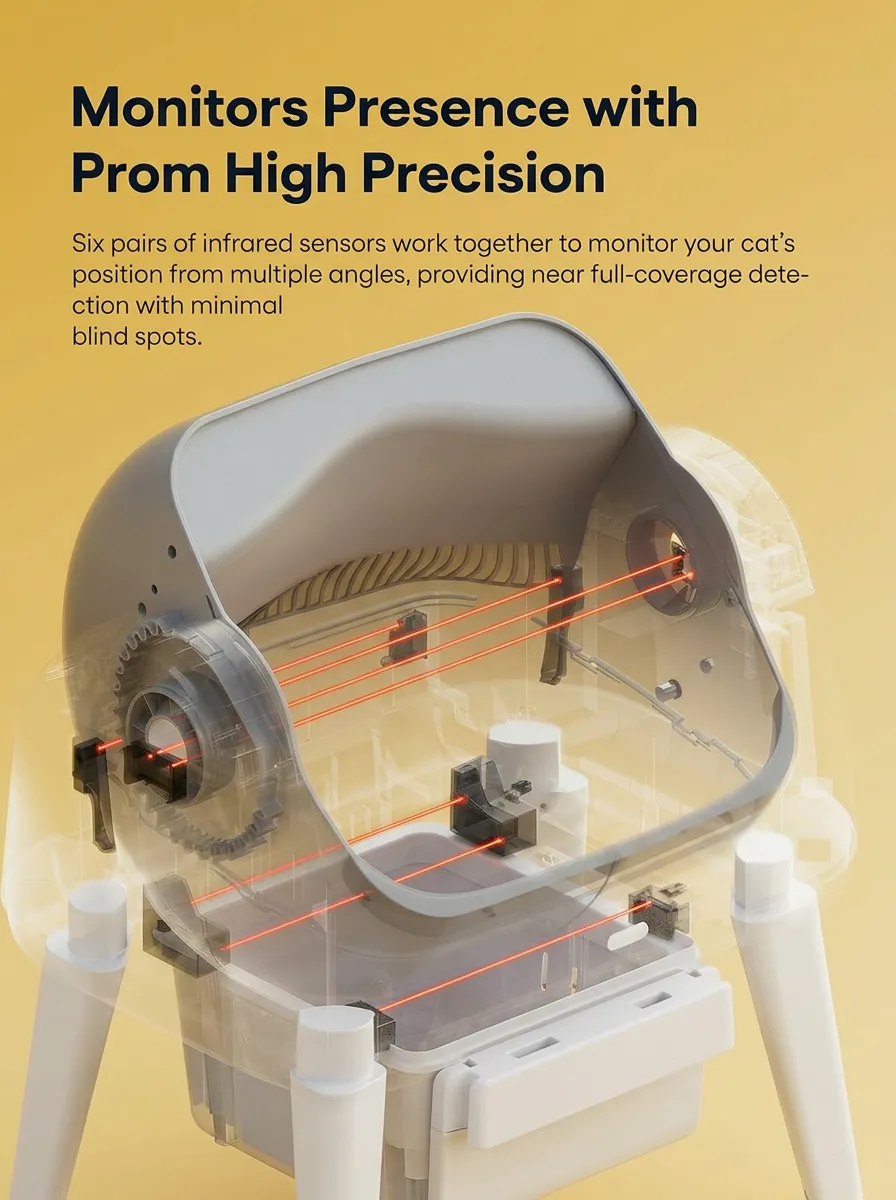
Full Coverage Detection
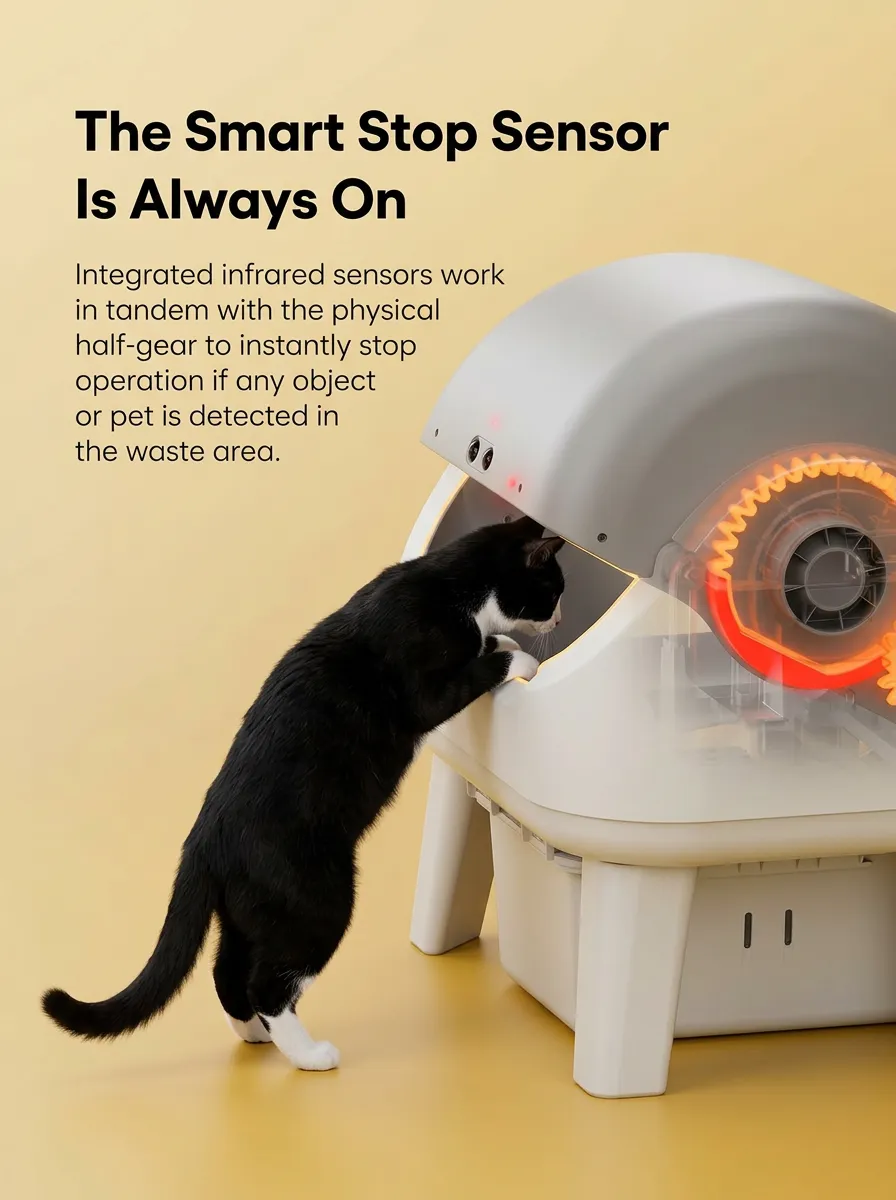
Six pairs of infrared sensors read your cat's position from multiple angles, giving near full-coverage detection with minimal blind spots.
Free U.S. shipping · 1-year warranty · Secure checkout
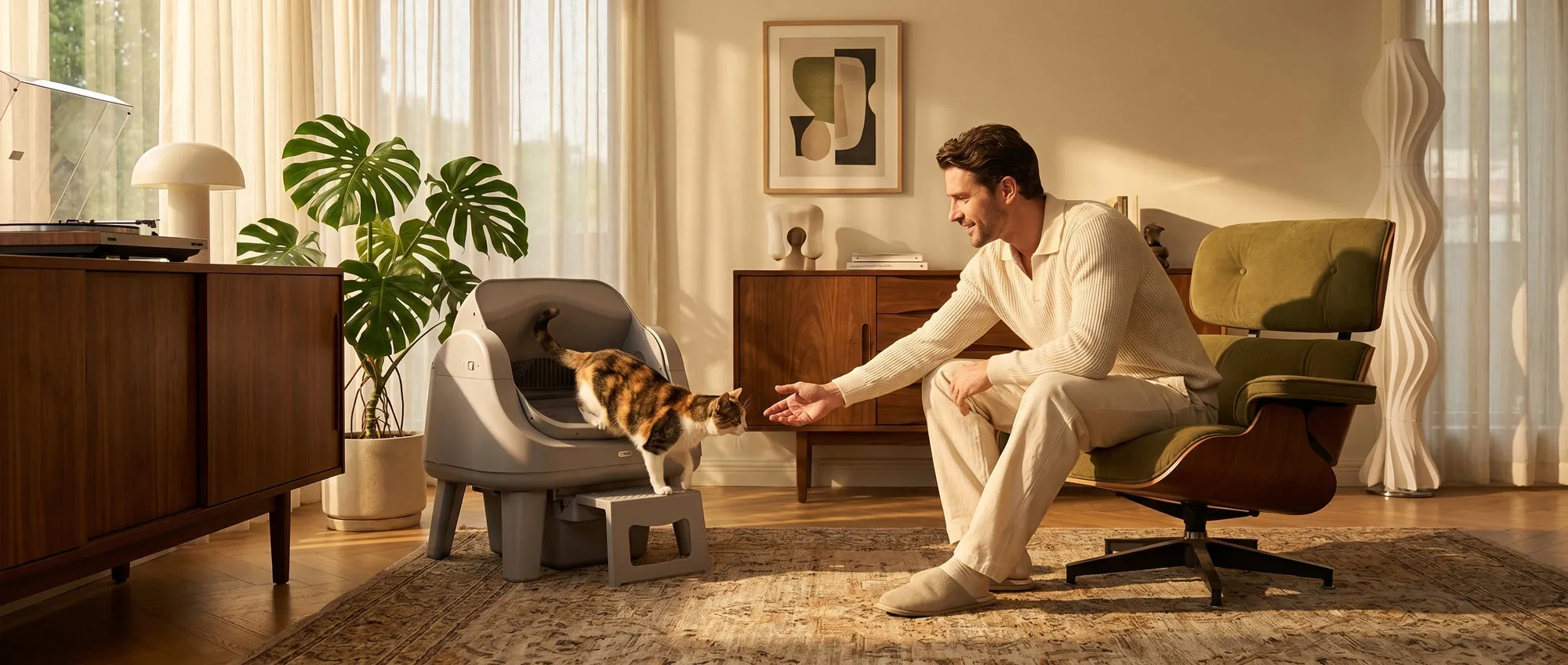
Four decisions shaped the S12: keep the top open, make safety redundant, seal the waste, and refuse to put it on the internet.
Decision one
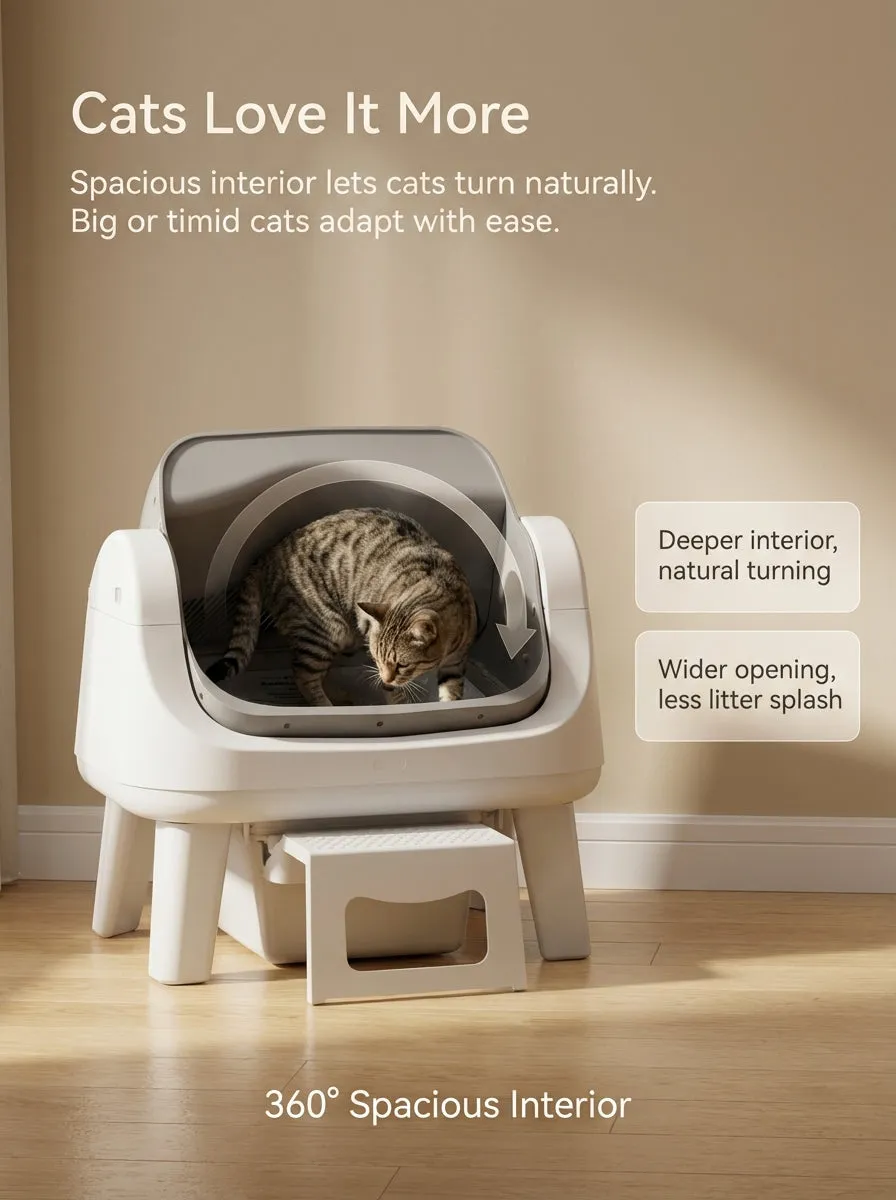
Most automatic litter boxes are enclosed globes. They look tidy, and they are a harder sell to a cat. Cats prefer somewhere they can see out of and leave from quickly — enclosure is a stressor, not a comfort.
The S12 has an open top and a 12.4-inch entrance with no climbing required. Large cats can turn without touching the sides; senior cats and cats with limited mobility can walk straight in. Adaptation is usually measured in days rather than weeks.
Decision two
A single sensor is a single point of failure. The S12 runs four independent protections at once — three electronic, one purely mechanical — and any one of them stops the cycle without help from the others.
Six pairs of infrared sensors read your cat's position from multiple angles, giving near full-coverage detection with minimal blind spots.
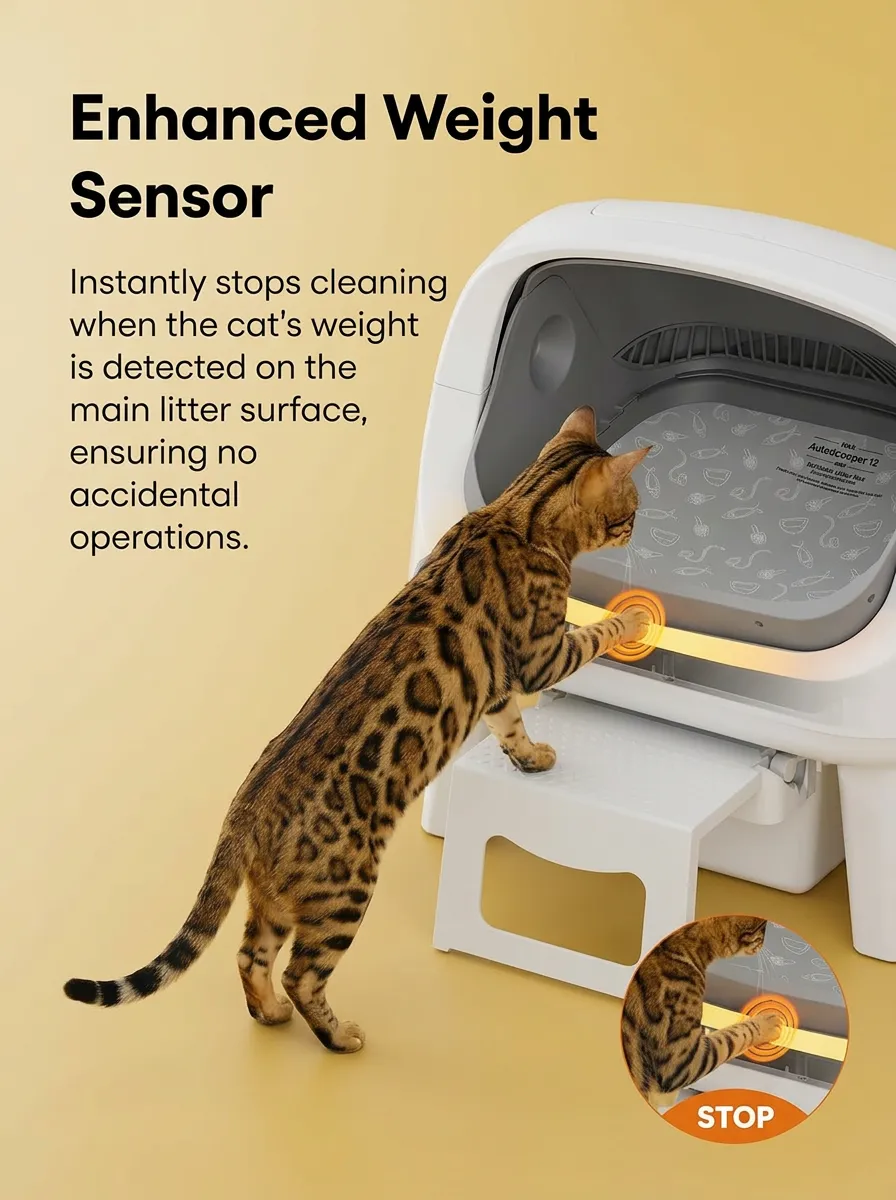
A weight-sensing floor and a touch-activated front pedal halt the cycle the moment your cat approaches or steps in.
A half-gear mechanism physically restricts travel, so the chamber cannot complete a full rotation under any condition.
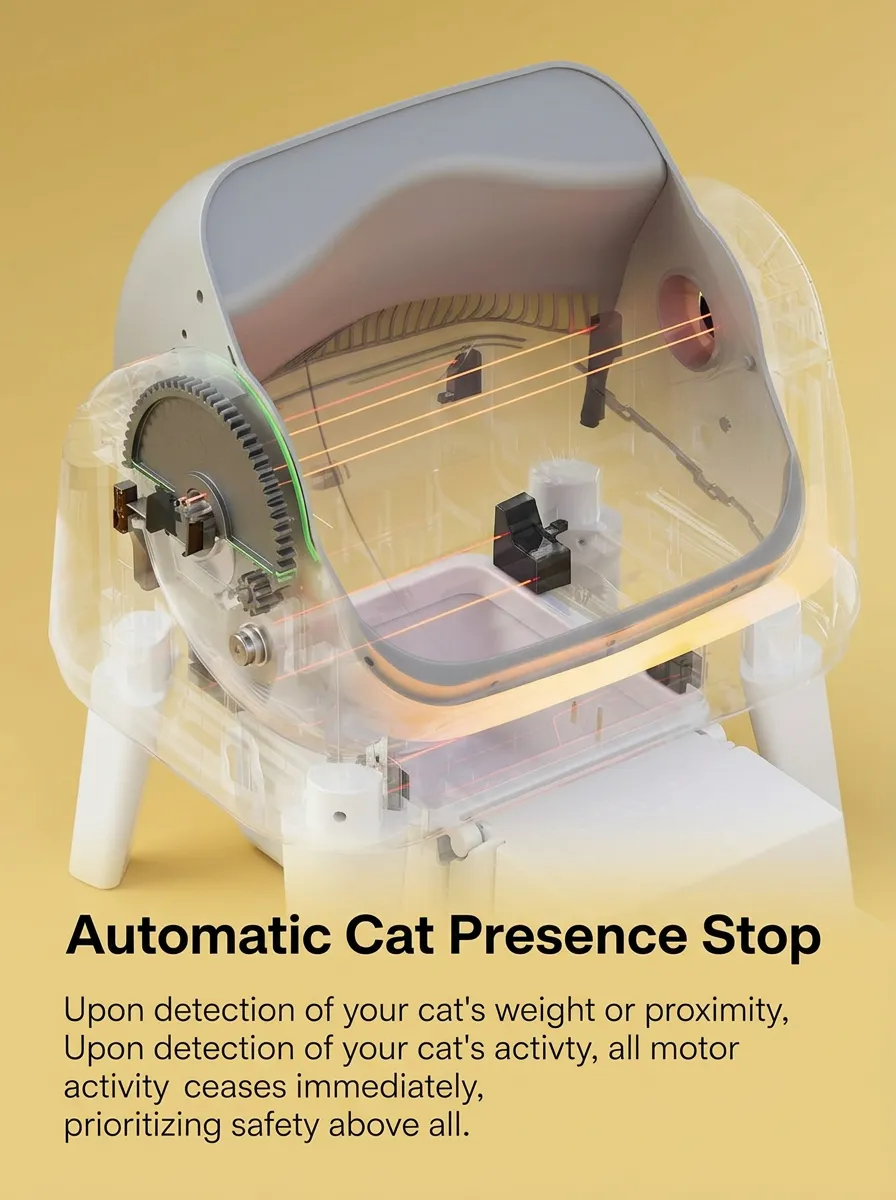
If any safety trigger fires during a cycle, all motor activity ceases immediately and the unit waits for a clear reading.
The honest caveat: no automatic litter box is risk-free around an animal. Supervise kittens, unwell cats and cats below the 3 lb minimum, and use manual mode if your cat behaves unpredictably around the unit.
Decision three
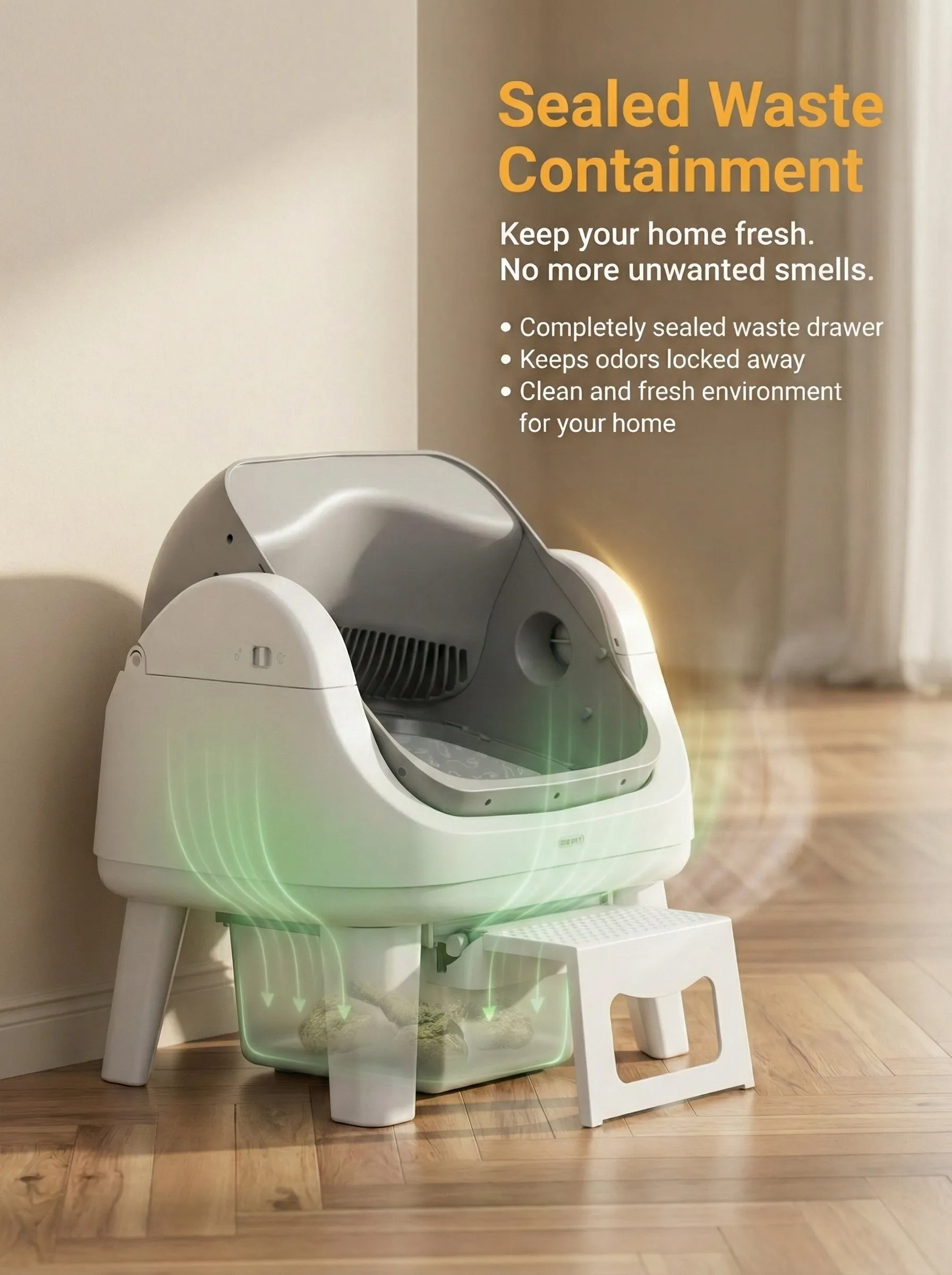
Odour does not come from the litter bed — it comes from waste sitting in open air. So the S12 encloses the drawer rather than the cat. Each cycle drops clumps into a sealed 8.5 L container below, where they stay contained until you empty it.
In practice that is one cleanout every 7–10 days for a single cat, instead of scooping twice a day. Both the chamber and the drawer rinse clean under a tap.
Decision four
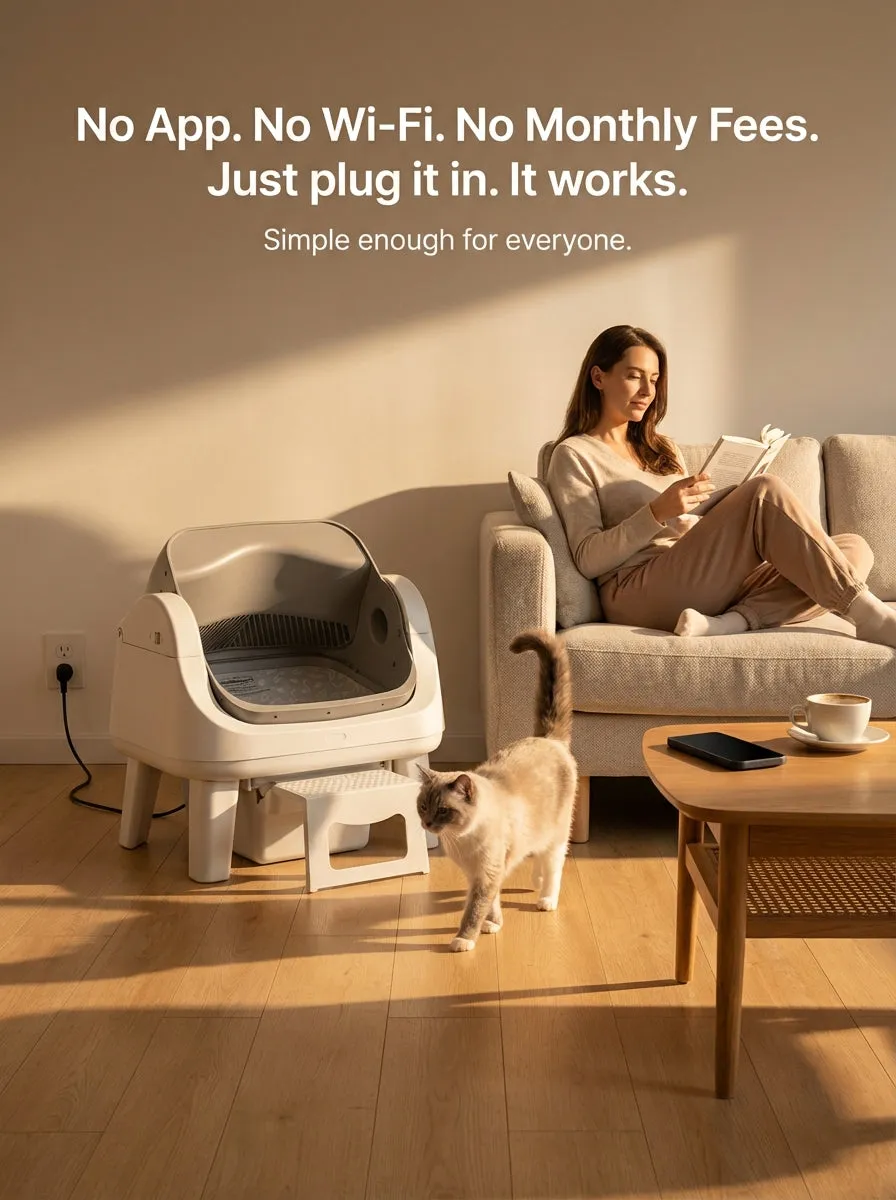
A litter box does not need an account, a companion app, a firmware update or a cloud connection. Every one of those is a way for it to stop working — a server retires, an app drops support for your phone, a subscription lapses.
The S12 has one button. Plug it in, and within two minutes it has aligned itself and is running. Hold the button for five seconds to switch to manual mode. That is the entire interface, and it will work exactly the same in ten years.
There is no monthly fee, and there never will be. Nothing about the machine depends on us still being here.
Side by side
| Manual litter box | SmartCat S12 | |
|---|---|---|
| Cleaning | Twice a day, by hand | Automatic, after every visit |
| Odour | Open tray, vents into the room | Sealed 8.5 L drawer |
| Your time | About 60 hours a year | Empty the drawer weekly |
| Litter used | Wasted with every full change | Only clumps removed |
| Setup | None | Plug in — no app, no Wi-Fi |
| Multi-cat | One box per cat, plus one | Fresh bed for the next cat |
Time estimate assumes two scoops a day at about five minutes each, which is typical for a single-cat household. Your own routine may differ.
$149.00 — was $179.99. Free U.S. shipping and a 1-year warranty.